
A residential tower garbage chute is not a simple vertical duct. It is a high-use building service system that must move daily waste safely through multiple occupied floors while controlling odor, noise, fire exposure, leakage, and corrosion. When the chute is poorly specified or maintained, residents notice quickly: unpleasant smells at intake doors, blocked shafts, damaged discharge areas, and recurring complaints to the facility team.
For developers, consultants, and property managers, the goal is not merely to install a chute. The goal is to install a system that remains serviceable under constant use, supports cleaning access, and protects the building over its operating life.
Why Residential Towers Need a Properly Engineered Chute
Waste volume in a residential tower is concentrated into a narrow system that operates every day. Bags are dropped from different floors, often at peak periods, with varying contents and inconsistent handling by residents. The chute must withstand repeated impact, moisture, cleaning chemicals, heat, and abrasion without allowing joints, doors, or internal surfaces to deteriorate.
A poorly fabricated chute can create operational issues far beyond the waste room. Misaligned sections can catch bags and cause blockages. Inadequate joints may leak odor or wash water. Thin metal can deform under impact. Doors without reliable seals can allow smells into service corridors and common areas. Once these problems become routine, the building team spends time responding to complaints instead of managing planned maintenance.
The chute should therefore be treated as a coordinated package: shaft sections, intake doors, support arrangements, offsets where required, ventilation provisions, fire-rated components, discharge connection, and access for cleaning and inspection. Each item affects the performance of the others.
Residential Tower Garbage Chute Material Selection
Material grade is one of the first decisions that determines long-term reliability. Galvanized steel may suit limited applications where conditions are controlled and budgets are tight, but it can be vulnerable when moisture, waste residue, and frequent washdown are part of normal operation. For high-occupancy towers and demanding coastal environments, stainless steel is generally the stronger long-term choice.
Stainless Steel 316 Grade garbage chute sections offer improved resistance to corrosion in humid and chloride-prone conditions. This matters in UAE projects, where high temperatures, coastal air, and intensive building use can accelerate deterioration in inferior materials. A smooth stainless interior also supports cleaning by reducing rough areas where residue can collect.
Material alone does not guarantee performance. Sheet thickness, welding quality, flange design, internal finish, section alignment, and support spacing all need review. A chute can be made from a good grade of stainless steel and still fail prematurely if fabricated with weak connections or installed out of plumb.
Fabrication Details That Prevent Recurring Problems
Chute sections should be accurately rolled and joined so the internal bore remains smooth from floor to floor. Protruding fasteners, uneven welds, sharp internal edges, and poorly matched flanges create points where refuse bags can snag. These small fabrication defects often become the starting point for repeated blockages.
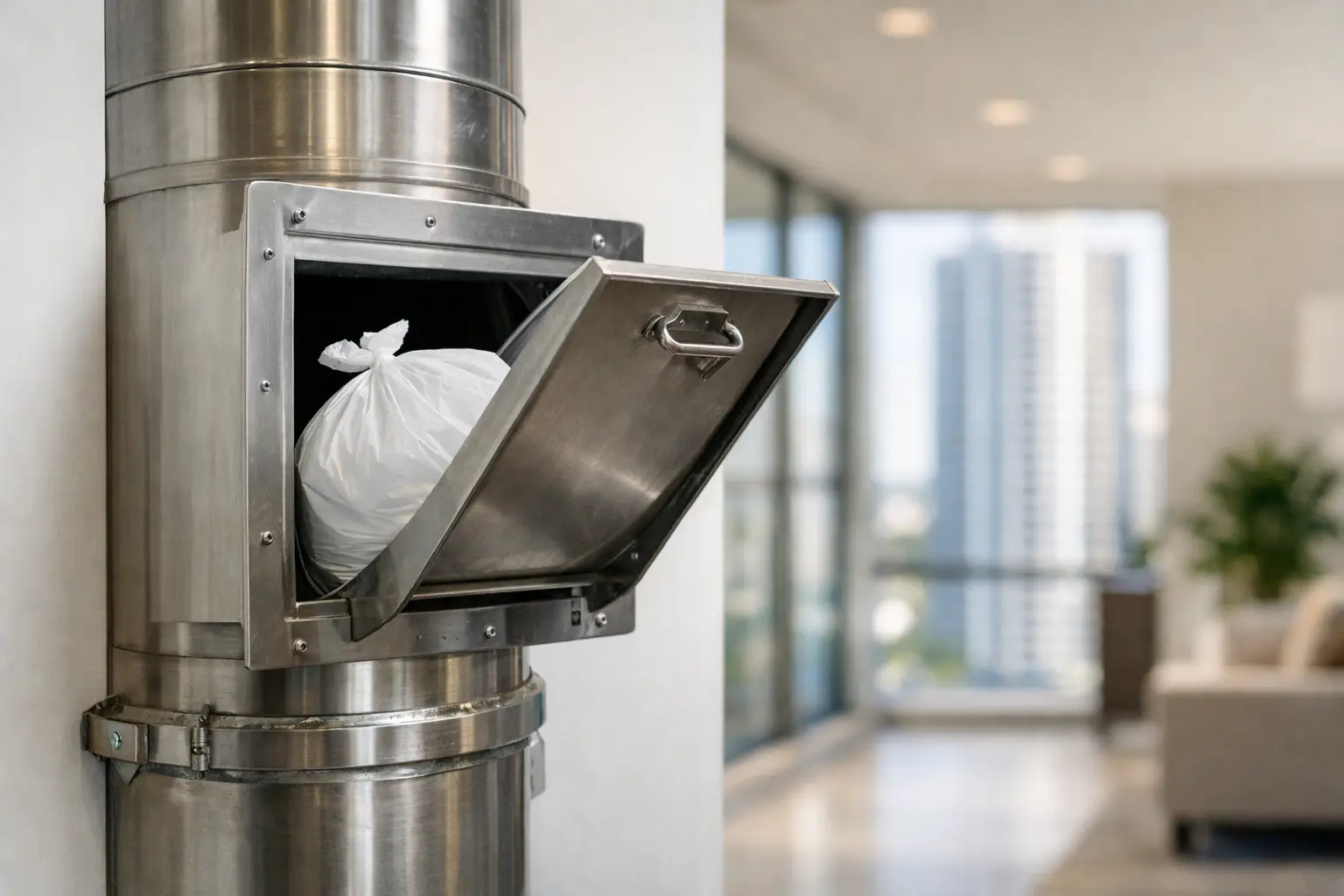
Intake doors require the same level of attention. They should close positively, resist frequent impact, and include seals suited to the intended operating conditions. Door frames must be fixed securely to the surrounding wall system so that daily use does not loosen alignment over time. Where fire-rated doors or automatic closing arrangements are required, they must be selected and installed in line with the approved project requirements.
Design Around Operations, Not Only Drawings
A chute layout can look correct on a drawing while being difficult to operate after handover. The most practical designs account for how maintenance staff will clean the shaft, remove a blockage, inspect doors, and manage waste at the discharge point.
The bottom discharge area deserves particular focus because it receives the highest impact and the largest concentration of waste. The connection between the chute and collection equipment must be properly coordinated. If the discharge opening is undersized, poorly positioned, or exposed to uncontrolled impact, bags can burst, waste can accumulate, and cleaning becomes harder.
Ventilation is another major consideration. A garbage chute should not become a route for odors to migrate into occupied areas. The required ventilation arrangement depends on the building design and local approvals, but the principle is consistent: airflow, sealing, and access doors must work together. Trying to solve odor complaints only with air fresheners or frequent deodorizing does not correct leakage, poor door seals, or an unsuitable ventilation path.
Noise control may also be necessary in premium residential projects. Waste falling through a tall shaft creates impact noise, especially when the chute is close to apartments or sensitive common areas. The answer may involve careful routing, suitable discharge arrangements, and properly detailed shaft construction. It depends on tower height, shaft location, waste handling practice, and the acoustic expectations of the development.
Fire Safety and Access Cannot Be Added Later
Chutes pass through multiple levels of a building, making fire separation and compartment integrity central to the design. The exact requirements vary by authority approval, building classification, and project specification. Facility teams and contractors should avoid making assumptions based on another building's arrangement.
What matters is early coordination between the chute supplier, consultant, civil contractor, MEP team, and fire safety specialist. Intake doors, shaft openings, dampers where applicable, discharge room arrangements, and surrounding penetrations must be addressed before finishes are completed. Late modifications are disruptive and can compromise both appearance and access.
Cleaning access is equally critical. Over time, residue can build up on internal surfaces, especially when waste bags leak or residents dispose of unsuitable materials. A practical cleaning strategy should be considered during design, including access points, suitable washing arrangements, drainage coordination, and safe maintenance procedures. If staff cannot reach the parts that need inspection, the system will be maintained reactively instead of properly.
Installation Quality Determines Service Life
Even the best chute specification can be undermined by poor installation. Vertical alignment must be checked throughout the shaft. Supports must carry the system without allowing movement, vibration, or stress at joints. Openings at each floor need accurate coordination so intake doors sit level and seal correctly against their frames.
Before handover, the contractor should inspect the internal path, test door operation, verify fastening and supports, review discharge alignment, and confirm that access components are usable. Any protective film, debris, weld contamination, or construction waste left inside the chute should be removed before the system enters service.
For refurbishment projects, the inspection stage is especially valuable. Existing towers may have corrosion around doors, damaged sections, leaking joints, recurring blockages, or poorly modified discharge areas. A site assessment can identify whether selective replacement is practical or whether the chute needs a more complete rehabilitation. The right answer depends on the condition of the shaft, accessibility, material loss, and the building's maintenance history.
Maintenance Priorities for Facility Teams
A chute does not need complicated daily intervention, but it does need a defined maintenance routine. Door closers, handles, seals, hinges, and latching points should be inspected regularly because they are the components residents use most. The shaft and discharge room should be cleaned on a scheduled basis rather than only after an odor complaint or blockage.
Facility teams should also document repeat issues. If a blockage repeatedly occurs at one level, the cause may be a misaligned joint, an offset, damage inside the shaft, or unsuitable waste disposal behavior. Repeated odor at a particular floor may point to a failing seal or an opening around the intake frame. These patterns are useful diagnostic evidence, not just service calls.
Promax Contracting supports garbage chute fabrication, supply, installation, inspection, and repair with a practical focus on stainless steel construction, accurate site execution, and maintainable system details. For tower projects, early technical review can prevent costly corrections after residents move in.
A well-built chute stays mostly unnoticed, which is exactly how it should perform. Specify it for hard daily use, leave access for the people who maintain it, and address corrosion, sealing, and alignment before the shaft is closed.
Talk to Promax
Speak to Promax for expert help in Dubai & the UAE. Call +971 56 727 4205 or request a free consultation for metal-roof waterproofing, garbage & linen chute systems and LEXA KNX home automation.