
A leak above an active warehouse bay, production line, storage area, or electrical room is rarely a small problem. Water can travel far from the visible stain, saturate insulation, corrode metal components, damage stock, and create safety risks before the source is confirmed. This facility waterproofing maintenance guide gives facility teams a practical way to find warning signs early, prioritize repairs, and protect the building envelope before a minor defect becomes an operational shutdown.
Facility Waterproofing Maintenance Guide for Active Buildings
Waterproofing maintenance is not limited to checking for visible leaks after rain. A sound program looks at the complete water path: the roof surface, seams, flashings, gutters, downpipes, expansion joints, wall interfaces, skylights, pipe penetrations, and drainage discharge points. Failure in any one area can allow water into the building.
For large facilities, maintenance should be planned around exposure and risk. A distribution center with a wide metal roof may need close attention around fasteners, laps, gutters, and ridge details. A concrete roof may require regular checks for cracks, ponding, membrane separation, and deteriorated sealant at upstands. Buildings near coastal areas or exposed to extreme heat need additional monitoring because UV exposure, thermal movement, humidity, and corrosion accelerate deterioration.
The objective is simple: identify defects when they can still be repaired locally. Replacing a failed seal around a pipe penetration is far less disruptive than addressing wet insulation, corroded roof sheets, and internal ceiling damage after repeated water ingress.
Start With a Baseline Condition Survey
A maintenance plan is only useful when the existing roof and waterproofing condition are documented. Begin with a professional inspection that records the roof type, waterproofing system, drainage layout, repair history, visible defects, and high-risk details. Photographs should be taken with location references so future inspections can compare conditions accurately.
The survey should identify whether the issue is active leakage, deferred maintenance, or an end-of-life system. These are different conditions and require different responses. An active leak may need immediate temporary sealing and water diversion while a permanent repair is planned. Deferred maintenance may involve clearing drains, resealing laps, treating fasteners, and replacing damaged flashing. A membrane with widespread aging, cracking, or detachment may require a larger rehabilitation scope rather than repeated patch repairs.
Review past leak reports with the inspection findings. If the same area has been repaired several times, the visible point of entry may not be the actual failure location. Water can enter at a higher point and travel beneath a membrane, through insulation, along structural members, or inside wall cavities.
Inspect the Details That Fail First
Large roof fields matter, but most leaks begin at transitions and penetrations. Maintenance teams should pay particular attention to joints where two materials meet or where the waterproofing layer changes direction.
Penetrations, fasteners, and service supports
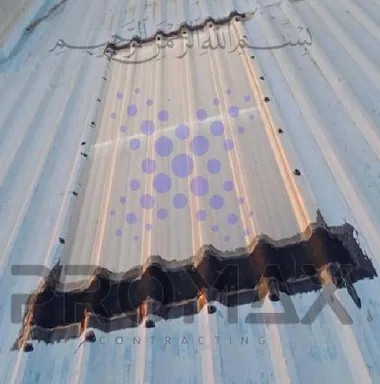
Pipes, ducts, cable trays, mechanical supports, and other roof penetrations must remain tightly sealed while allowing for movement. Sealant that has hardened, cracked, pulled away, or lost adhesion should be addressed before water reaches the substrate. On metal roofs, loose or corroded fasteners, damaged washers, and untreated screw heads are common entry points.
Temporary services installed after the original roof work are a frequent source of failure. Every new cable route, support bracket, or mechanical installation should be reviewed for waterproofing compatibility. Cutting through a roof and applying generic sealant without the correct flashing detail creates a predictable maintenance issue.
Flashings, parapets, and wall connections
Roof-to-wall junctions are exposed to movement, wind pressure, and standing water. Check for open laps, lifting membrane edges, cracked sealant, loose termination bars, and damage around parapet coping. These areas should be inspected after high winds as well as after heavy rain.
Concrete surfaces require attention to cracks and failed construction joints. Not every crack is structurally significant, but every crack that allows water into the roof build-up or wall system needs assessment. The repair method depends on crack movement, moisture condition, substrate quality, and the existing waterproofing material.
Gutters and drainage outlets
A waterproofing system cannot perform properly when water is trapped on the roof. Gutters filled with debris, blocked outlets, damaged downpipes, and inadequate falls can cause ponding that stresses seams and flashings. Water standing near a roof penetration or gutter edge will expose small defects much faster than a well-drained roof.
During inspection, look for staining, corrosion, sagging gutters, separated joints, and water marks around outlets. Verify that discharged water is directed away from the structure and does not overflow onto wall surfaces or access areas.
Set an Inspection Frequency Based on Risk
A fixed annual inspection is often not enough for facilities with aging roofs or severe exposure. The right interval depends on roof age, system type, building use, nearby trees, drainage complexity, prior leak history, and environmental conditions.
As a working approach, inspect critical roofs before the wet season, after major storms, and whenever rooftop contractors complete work. High-risk areas such as gutters, skylights, roof hatches, expansion joints, and heavily serviced penetrations should receive more frequent checks than stable roof sections with no repair history.
A simple inspection record should include the date, weather conditions, area inspected, defect description, photographs, recommended action, responsible party, and completion date. This prevents recurring items from being lost between facility teams, contractors, and budget cycles.
Separate Emergency Repairs From Permanent Repairs
When water is entering an occupied area, the first priority is to protect people, equipment, and operations. Isolate affected electrical areas where required, move vulnerable stock, contain water, and document the incident. An emergency patch may stop immediate ingress, but it should not automatically be treated as a permanent solution.
Permanent repair work requires confirmation of the roof build-up, substrate condition, moisture extent, and compatibility with the existing system. Applying an incompatible coating, membrane strip, or sealant can trap moisture or fail under thermal movement. It can also make later repairs more difficult.
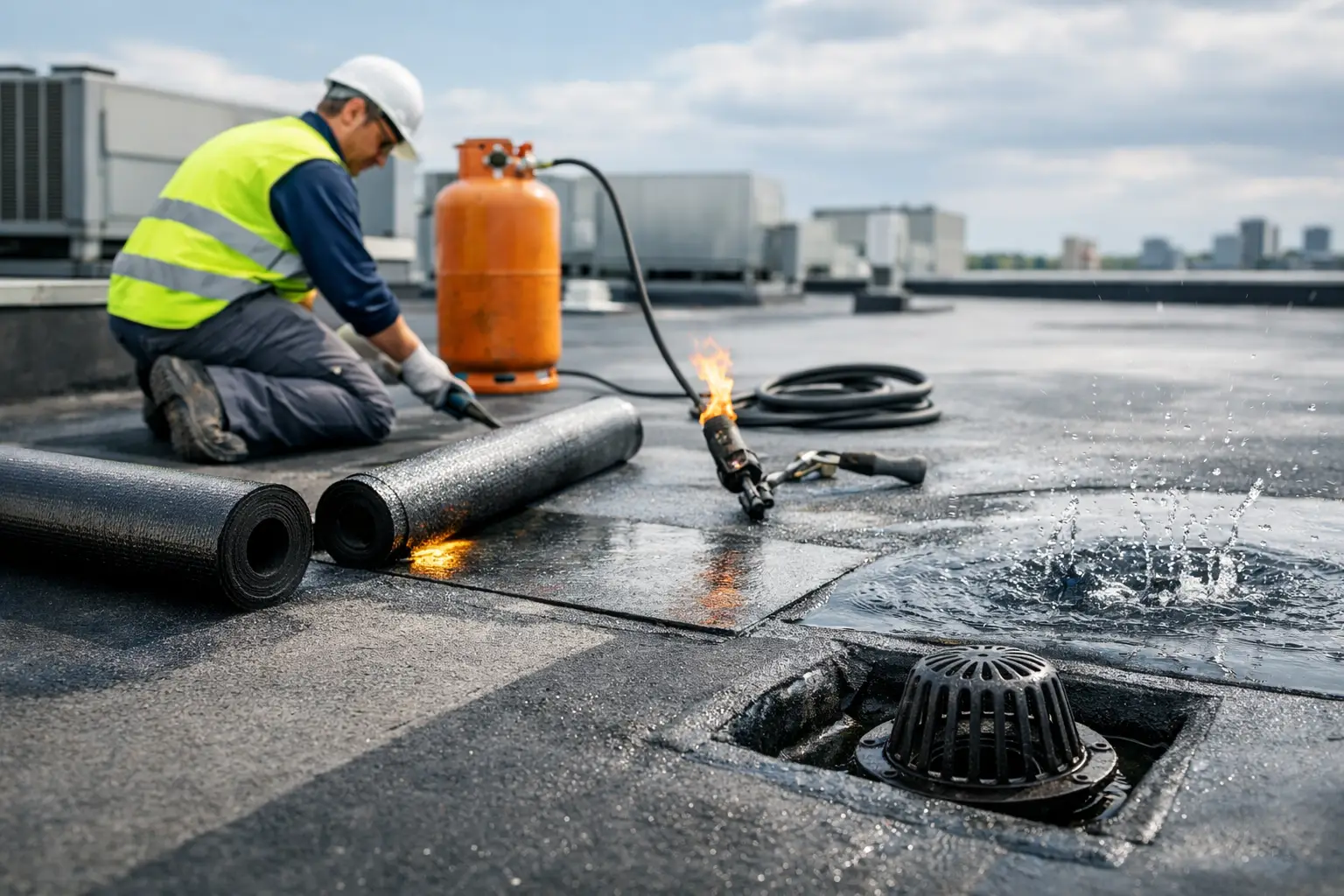
For example, an EPDM-based waterproofing repair may be appropriate where flexibility, weather resistance, and detailed flashing performance are needed. However, the surface must be properly prepared, and the repair should be integrated with surrounding seams and terminations. The system selection depends on the roof material, slope, exposure, and existing waterproofing condition.
Plan Repairs Around Facility Operations
Waterproofing work is often performed above active operations, so access, safety, and sequencing matter as much as the repair material. Before starting work, confirm roof access routes, fall-protection requirements, work zones below the repair area, material storage locations, and weather limitations.
For warehouses and factories, the contractor should coordinate with the facility team to avoid disruption to loading schedules, sensitive equipment, clean areas, or occupied spaces. Some repairs can be completed in short sections during off-peak periods. Larger roof rehabilitation may need phased execution so the building remains operational while high-risk sections are addressed first.
Do not overlook metal corrosion during planning. Rusted roof sheets, purlins, gutters, or support components can compromise the effectiveness of a waterproofing repair. Surface preparation, rust treatment, replacement of severely deteriorated material, and protective coating work may be required before the waterproofing system can perform as intended.
Know When Repair Is No Longer Cost-Effective
Repeated localized repairs are sensible when defects are isolated and the main waterproofing system remains sound. They become less cost-effective when leaks occur across multiple zones, seams are failing widely, corrosion is advanced, ponding is persistent, or the system has reached the end of its service life.
A condition-based rehabilitation plan gives facility managers better control than responding to each leak individually. It can prioritize urgent sections, forecast budgets, coordinate access requirements, and reduce the risk of emergency work during unfavorable weather.
Promax Contracting approaches this work through site inspection, technical diagnosis, system selection, fabrication support where needed, and after-sales response. The practical value is not just applying material to a visible leak. It is identifying why water entered, correcting the detail, and making the repaired area easier to maintain.
Keep waterproofing records current, act on early warning signs, and treat drainage and roof details as part of the same protective system. A well-timed inspection can prevent the next leak from becoming the next interruption to your facility.
Talk to Promax
Speak to Promax for expert help in Dubai & the UAE. Call +971 56 727 4205 or request a free consultation for metal-roof waterproofing, industrial roofing and concrete & structural waterproofing.