
A garbage chute Abu Dhabi system is not a simple vertical duct. In a busy residential tower, hotel, hospital, or staff accommodation building, it is a daily-use waste route that must handle repeated impact, moisture, odors, cleaning chemicals, and fire-safety requirements. When the chute is poorly specified or installed without proper alignment, the result is familiar to every facility manager: jammed bags, leaking joints, damaged intake doors, odor complaints, and expensive access work after handover.
For new construction and replacement projects, the right approach is to assess the full route from each intake floor to the collection point. Chute material, diameter, floor-to-floor connections, intake doors, discharge arrangement, ventilation, and support brackets all need to work as one system. A durable chute reduces maintenance calls and keeps waste handling controlled in buildings where downtime is not acceptable.
Why Garbage Chute Design Matters in Abu Dhabi
High-rise waste systems operate under hard conditions. Internal chute surfaces see abrasive waste bags, liquid leakage, humidity, frequent washing, and occasional misuse. External sections, where applicable, may also be exposed to heat, dust, and corrosive air conditions. Thin material, unprotected cut edges, and weak joint fabrication can quickly become recurring maintenance issues.
The building layout also affects performance. A chute serving a small residential block has different demand than one serving a high-occupancy tower, hotel, or institutional property. Larger buildings may require greater capacity, more durable doors, controlled access, and a collection room designed for safe movement of bins and cleaning equipment. Selecting a system only by the lowest supply price can shift the cost into repairs, cleaning labor, and tenant complaints later.
A proper site inspection should confirm shaft dimensions, slab openings, access at every floor, discharge height, collection-room space, ventilation provisions, and the condition of any existing supports. This is particularly important in refurbishment work, where drawings may not reflect on-site modifications.
316 Stainless Steel for Long-Term Service
For demanding applications, stainless steel 316 grade is a practical material choice for garbage chutes. Its corrosion resistance makes it suitable where moisture, cleaning activity, and waste leakage can affect the system over time. The smooth internal surface also helps waste move down the chute with less chance of snagging than rough or damaged sheet surfaces.
Material grade alone does not guarantee a reliable installation. Sheet thickness must be suitable for the chute diameter and expected use. Sections should be accurately rolled, welded, and finished so internal joints do not create sharp lips that catch bags. Supports must carry the vertical load correctly rather than relying on random fixing points or overloaded slab-edge connections.
Galvanized or GI chute systems can be appropriate for selected projects where budget, building use, and environmental exposure permit. However, they need realistic evaluation. Once protective coating is damaged at seams, fasteners, or high-wear zones, corrosion can advance quickly. For buildings seeking a longer service interval and a more resilient internal waste route, 316 stainless steel is commonly the better specification.
Key Parts of a Garbage Chute System
A waste chute performs well only when its connected components are properly matched. The vertical chute body is the main element, but it relies on correctly selected intake doors, hopper sections, fire protection components, ventilation, and a discharge point that suits the waste collection method.
Intake Doors and Hopper Sections
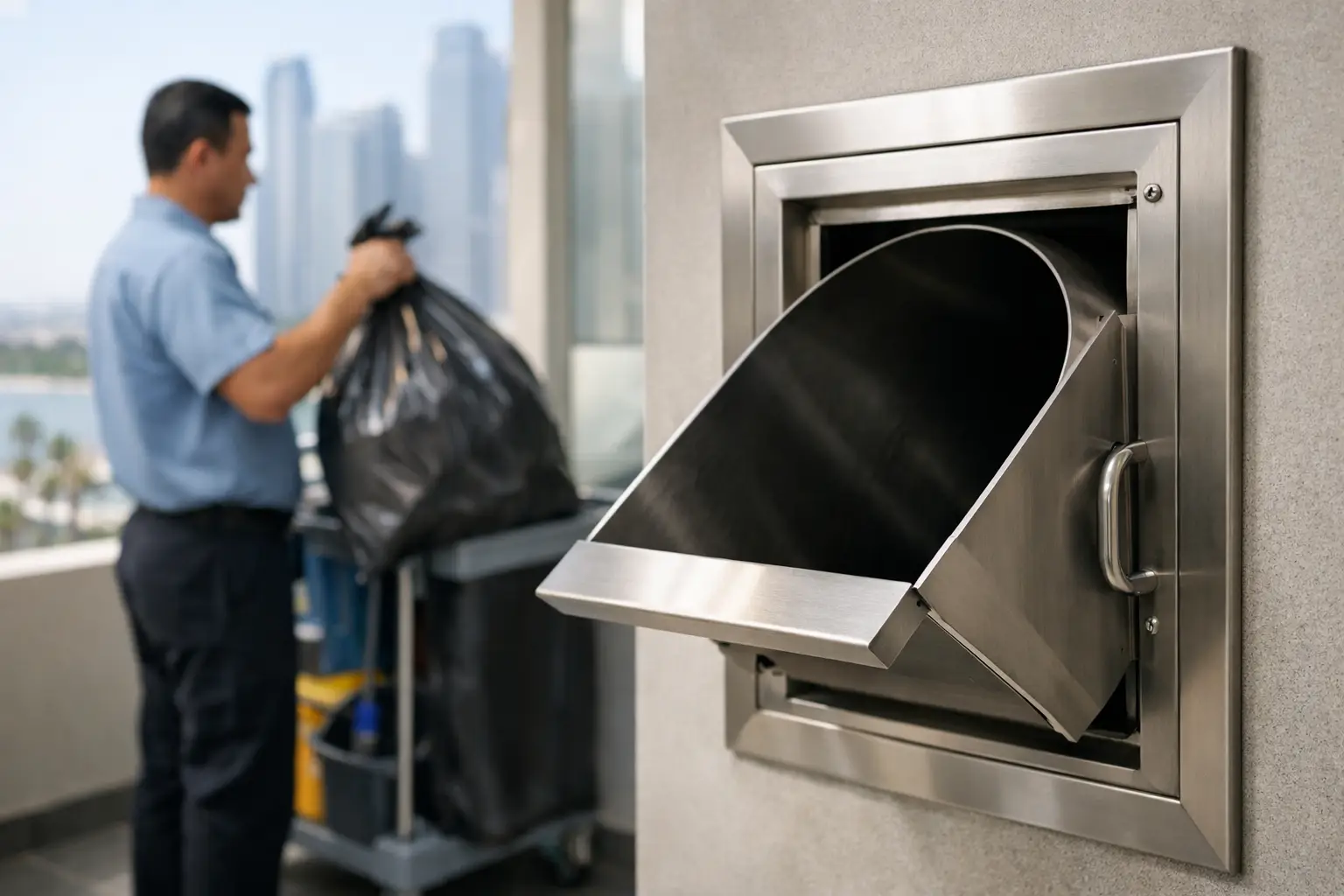
Intake doors receive constant handling from residents, housekeeping teams, and building staff. They should be strong, properly hinged, easy to close, and sized to accept normal bagged waste without encouraging overloading. Poorly fitted doors can rattle, leak odor into corridors, or fail to shut fully.
Hopper sections need careful fabrication and alignment. If the entry angle is incorrect or the opening is too restrictive, bags can lodge at the intake point. If an old building has a history of blockages on only certain floors, the problem may be an uneven hopper transition rather than the main vertical chute.
Fire-Rated Protection and Shaft Integrity
Garbage chutes pass through multiple floors, so fire safety cannot be treated as an accessory item. Fire-rated intake doors and correctly detailed floor penetrations help preserve the intended fire separation between levels. Requirements depend on the building design, local authority approvals, and the consultant's specification.
During replacement work, it is essential to inspect shaft openings and surrounding construction before new sections are installed. Gaps, damaged edges, or unsealed penetrations can compromise the building detail even if the new chute itself is well fabricated. The installation team should coordinate the chute work with the required fire-stopping and finishing scope.
Ventilation, Odor Control, and Cleaning Access
Odor is usually a system issue, not just a cleaning issue. A chute with inadequate ventilation, leaking doors, open joints, or poor discharge-room housekeeping will continue to create complaints regardless of how often it is washed. Ventilation arrangements should be designed to move odors away from occupied corridors and avoid creating pressure conditions that make doors difficult to use.
Cleaning access is equally important. Facility teams need a safe and practical way to wash, inspect, and maintain the chute. Depending on the building and operating procedure, this may involve wash-down points, access panels, drainage provisions, and clear service access in the collection area. These details are easier and less costly to provide during installation than after occupants move in.
Choosing the Right Chute Diameter and Layout
There is no single correct diameter for every garbage chute in Abu Dhabi. The suitable size depends on occupancy, waste volume, the type of waste expected, and operational rules. A larger chute can reduce the risk of bags catching, but it also requires adequate shaft space, larger intake details, and appropriate support design. A smaller chute may fit an existing shaft but can become a blockage point in a high-use property.
The discharge end requires the same level of planning. Waste must enter bins, compactors, or collection equipment without excessive spillage or unsafe manual handling. The collection room should allow staff to move containers, clean the area, and access the lower chute section for service. When discharge arrangements are cramped, maintenance becomes reactive because staff cannot safely reach the locations that need attention.
For linen chute applications, the design priorities differ slightly. Hotels, hospitals, and accommodation facilities need a clean route that protects linens from snagging and cross-contamination. Chute diameter, intake door configuration, landing arrangements, and collection method must suit the volume and type of linen being handled. The system should be dedicated to its intended use rather than treated as a general-purpose shaft.
Installation Quality Determines Service Life
Even a well-specified stainless steel chute will underperform if installation is rushed. Each section needs correct vertical alignment, secure connection, and sufficient support. Misalignment creates internal steps where bags catch. Loose or poorly sealed joints allow leakage and odor. Inadequate brackets can lead to movement, noise, and stress at connection points.
A professional contractor should verify dimensions before fabrication, coordinate installation sequencing with the main contractor, and protect completed sections from damage during surrounding works. For replacement projects, removal of the old chute must also be controlled to prevent damage to shaft finishes, doors, and nearby services.
Promax Contracting provides fabrication, supply, installation, and maintenance support for stainless steel garbage chute and linen chute systems, with site-based assessment before recommending the appropriate scope. This approach helps building teams address the actual cause of chute failures instead of repeatedly repairing visible symptoms.
When Repair Is Enough and When Replacement Makes Sense
Not every chute problem requires full replacement. Localized door damage, minor joint leakage, worn seals, or a damaged hopper may be repaired when the main chute body remains sound. A targeted repair can be cost-effective where inspection confirms that the internal surfaces, supports, and major connections are in good condition.
Replacement becomes the more reliable option when corrosion is widespread, multiple sections are distorted, joints repeatedly leak, blockages occur across several floors, or the chute layout no longer suits the building's use. It may also be justified when an older system cannot be brought in line with current fire-safety or operational requirements without major alteration.
The practical decision comes from inspection, not assumption. A clear report on material condition, connection integrity, support status, and access limitations gives owners a basis for planning the work and avoiding repeated emergency repairs.
A garbage chute should disappear into the building's daily routine: doors close properly, waste reaches the collection point, corridors remain free from odor, and maintenance teams can service the system without disruption. That outcome starts with sound fabrication, correct installation, and a chute system designed for the building's real operating conditions.
Talk to Promax
Speak to Promax for expert help in Dubai & the UAE. Call +971 56 727 4205 or request a free consultation for metal-roof waterproofing, garbage & linen chute systems and LEXA KNX home automation.