
A garbage chute UAE system is not simply a vertical pipe with intake doors. In a residential tower, hotel, hospital, staff accommodation building, or mixed-use property, it is a daily-operating waste route that must control odor, fire risk, noise, leaks, and corrosion. When the chute is poorly specified or installed without proper alignment and support, it quickly becomes a maintenance problem affecting multiple floors.
For facility managers and project teams, the correct decision starts before fabrication. The building’s occupancy, waste volume, shaft dimensions, discharge arrangement, access requirements, and cleaning plan all affect the final system. A durable chute is designed as a complete assembly, not purchased as disconnected sections.
Garbage Chute UAE Requirements Start With Site Conditions
UAE buildings place demanding conditions on waste chute systems. High temperatures, humid service areas, coastal air in some locations, frequent cleaning, and continuous use can accelerate deterioration in weak materials and poorly finished joints. Residential buildings may also see misuse, including oversized bags, wet waste, sharp objects, and unauthorized disposal that put stress on hopper doors and chute sections.
The first site inspection should confirm the full vertical route from the highest intake point to the collection area. This includes floor-to-floor heights, shaft clearances, slab openings, existing supports, door locations, ventilation provisions, and access for future service. A small discrepancy in shaft size or a misaligned slab opening can force unnecessary offsets that restrict waste flow and create impact points inside the chute.
The collection room also deserves careful attention. Waste must discharge cleanly into bins or a compactor arrangement without causing bags to tear, waste to rebound, or staff to work in an unsafe confined area. Drainage, ventilation, washdown access, lighting, and space for bin movement should be reviewed before the chute diameter and bottom discharge configuration are finalized.
Select Materials for Service Life, Not Initial Price
Material selection is one of the main differences between a chute that remains serviceable and one that needs repeated repair. Stainless steel 316 grade is widely specified where corrosion resistance, hygiene, and long-term performance are priorities. It is particularly suitable for high-use buildings, coastal properties, hospitality facilities, and applications where wet waste and washdown are expected.
Galvanized steel or GI garbage chute construction may be considered for certain budget-driven applications. However, the coating condition, thickness, joint treatment, and exposure level must be assessed realistically. Once protective coatings are damaged at joints, doors, or impact areas, corrosion can begin and may spread quickly in a humid waste environment. Lower initial cost can become higher maintenance cost if replacement sections, door repairs, and cleaning-related deterioration are not planned for.
The internal finish matters as much as the external appearance. Smooth, properly joined sections reduce snagging and waste buildup. Rough welds, protruding fasteners, poorly cut openings, and poorly aligned collars can trap refuse and create odor. Chute sections should be fabricated with controlled dimensions, secure connection details, and enough rigidity to resist movement during operation.
Stainless Steel 316 Grade for High-Use Systems
For stainless steel garbage chutes, 316 grade provides stronger resistance to corrosion than standard stainless options in demanding conditions. This does not mean any 316-marked sheet will automatically deliver a quality system. Sheet thickness, welding practice, grinding and finishing, support design, hopper construction, and installation quality still determine how the chute performs over time.
A contractor should be able to explain where 316 grade is being used, how joints are formed, and how the system will be supported through the shaft. Clear material documentation and fabrication control prevent substitutions that may only become visible after the installation is complete.
Doors, Fire Safety, and User Handling
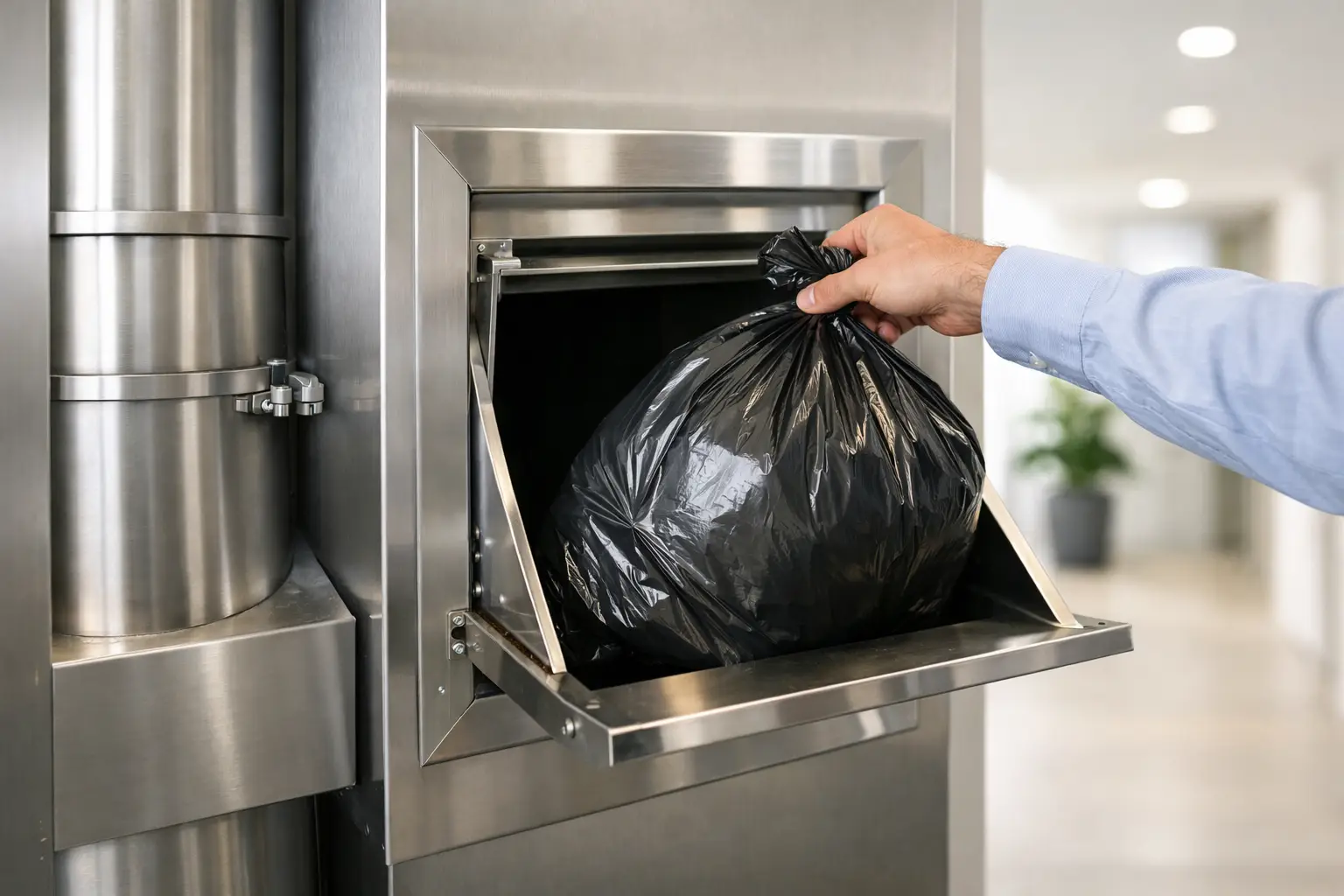
Each intake door is a high-contact component. It must open and close reliably, resist impact, sit correctly within the wall opening, and prevent odor from escaping into corridors or service areas. Door size should match the expected waste bags while limiting the chance that large cartons or bulky items are forced into the shaft.
Fire-rated hopper doors and related shaft protection details must be coordinated with the project’s approved fire and life-safety requirements. The required rating, door construction, self-closing action, frame detail, and interface with the surrounding wall are project-specific. Guesswork is not acceptable. The supplier, contractor, consultant, and fire-safety authority requirements should be aligned before fabrication begins.
Door placement also affects how residents, housekeeping staff, or building operators use the system. A door that projects too far into a narrow corridor can create an obstruction. A door installed too high or too low is inconvenient and likely to be abused. In hospitals and hotels, where cleanliness and quiet operation are especially important, controlled-closing hardware and suitable acoustic treatment may be worth the additional specification cost.
Fabrication and Installation Must Work as One Scope
A garbage chute system performs best when fabrication, supply, installation, and commissioning are managed as one coordinated scope. Separating these responsibilities can lead to disputes over incorrect shaft dimensions, missing supports, misaligned openings, or damaged components. The result is often site modification, delays, and compromised workmanship.
Before installation, the contractor should verify dimensions on site rather than relying only on architectural drawings. Buildings change during construction. Service ducts may intrude into the shaft, wall finishes may alter door openings, and structural elements may affect support positions. A practical survey identifies these issues early, when corrections are still manageable.
During installation, sections must be lifted, positioned, aligned, and fixed without twisting the vertical line of the chute. Supports need to carry the system load correctly while allowing for building movement where required by the design. Every floor connection and access opening should be checked before walls are closed or finishes are completed.
The discharge section is often where installation shortcuts become visible. If the lower transition is poorly designed, waste may strike an edge, bounce back, or accumulate above the bin area. This creates blockages, odor, and extra labor for building staff. A properly coordinated bottom section directs waste into the intended collection equipment and keeps maintenance access available.
Plan Cleaning and Maintenance Before Handover
No waste chute remains hygienic without regular cleaning. The system should include a practical maintenance strategy from the outset, particularly for properties handling wet waste or operating with high occupancy. Cleaning access, washdown points where applicable, ventilation, and clear operating instructions help the facility team keep the chute functional.
Routine inspections should focus on hopper door hinges and closers, seals, locks, wall-frame joints, chute supports, internal damage, and the discharge area. Building teams should also monitor recurring blockages. A blockage is rarely random. It may indicate a chute diameter that does not match actual usage, residents disposing of oversized materials, an internal obstruction, or damage at a joint.
Odor complaints should be investigated at their source instead of being covered with air fresheners. Common causes include failed door seals, accumulated waste inside the shaft, inadequate ventilation, leaking washdown connections, or a collection room that is not being cleaned and managed correctly. Addressing the physical cause protects tenant comfort and reduces repeated callouts.
When Retrofit Work Is the Right Option
Not every property needs a completely new chute. Existing systems can sometimes be repaired through replacement of damaged sections, hopper doors, supports, discharge components, or corroded cladding. The right approach depends on the condition of the shaft, the extent of corrosion, repeated blockage history, and whether the existing configuration meets current building requirements.
A retrofit should not be treated as a cosmetic repair. If corrosion has affected connection points, supports, or internal joints, the contractor needs to inspect the full route before proposing isolated patchwork. Replacing only the visible damaged section may not solve hidden deterioration above or below it.
For major rehabilitation or new installation work, Promax Contracting can support site inspection, stainless steel chute fabrication, supply, installation, and maintenance coordination for properties across the UAE. The objective is straightforward: provide a chute system that fits the building, withstands daily use, and remains accessible for the team responsible for operating it.
A well-executed chute is rarely noticed by occupants, which is exactly how it should be. Specify the material, door details, supports, discharge arrangement, and maintenance access correctly at the start, and the building will avoid many of the waste-handling failures that become expensive once the property is occupied.
Talk to Promax
Speak to Promax for expert help in Dubai & the UAE. Call +971 56 727 4205 or request a free consultation for metal-roof waterproofing, garbage & linen chute systems and LEXA KNX home automation.