
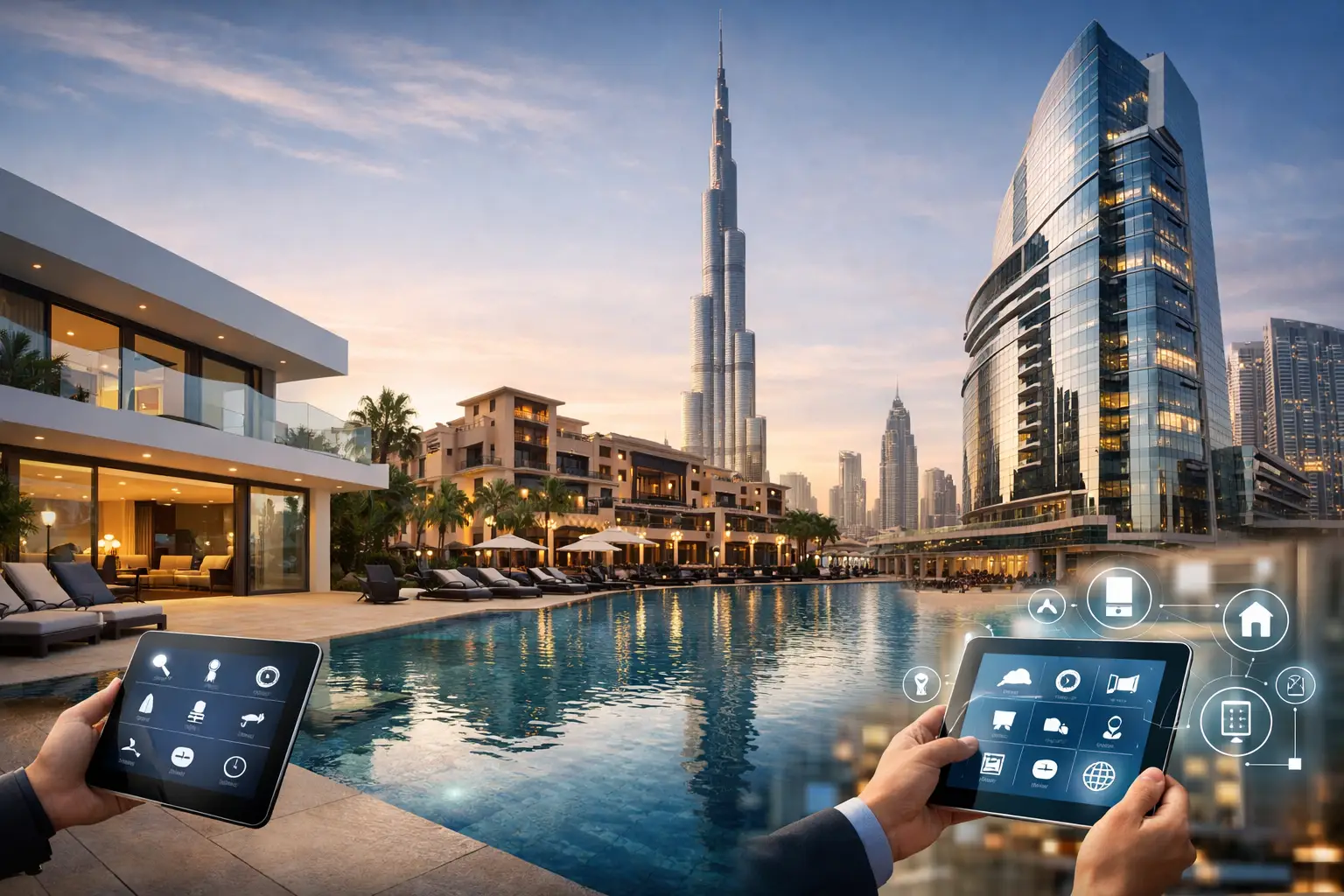
A KNX Dubai installation should solve real operating problems, not add another complicated screen for a facility team to manage. In villas, hotels, offices, and private developments, the right system brings lighting, climate control, shading, and selected electrical loads into one coordinated control architecture. The result is better comfort, clearer control, and less unnecessary energy use - provided the system is designed around how the property will actually operate.
For property owners and project teams, KNX is most valuable when it is specified early, coordinated with the electrical design, and commissioned by an integrator who understands both the equipment and the site. A poorly defined automation scope can create delayed handover, confusing controls, and difficult fault finding. A properly engineered KNX system gives users simple daily control while keeping the technical structure accessible for maintenance.
What KNX Controls in a Building
KNX is a building automation standard that allows compatible devices to communicate over a common control network. Instead of treating every switch, thermostat, sensor, and motorized curtain as an isolated item, the system connects them through programmed functions and scenes.
The practical scope depends on the building. A villa owner may want one-touch arrival, entertainment, sleep, and away scenarios. A hotel may need guest-room controls that reduce cooling and lighting demand when a room is unoccupied. Commercial properties may prioritize time schedules, occupancy response, central monitoring, and controlled access to selected systems.
A typical KNX scope can include smart lighting control, dimming circuits, switching circuits, thermostats, motion sensors, blinds or curtain control, scene panels, and centralized touch interfaces. Switches and scenario panels can be customized so that a user presses one labeled button rather than operating several separate controls.
The value is not simply having more functions. It is reducing repeated manual actions and preventing systems from running when they do not need to run. For example, a motion sensor can trigger corridor lighting at low brightness after hours, while an occupancy status can adjust the cooling setpoint in an unused area. These functions must be selected carefully. In spaces where people remain still for long periods, such as meeting rooms or bedrooms, sensor placement and time delays need more attention than in circulation areas.
Why KNX Dubai Projects Need Early Planning
Dubai projects face a combination of high cooling demand, strong sunlight, frequent occupancy changes, and high expectations for finishes and user experience. Automation decisions often arrive late, after electrical circuits, ceiling works, and control locations are already fixed. That approach limits what the system can do and may require costly revisions.
A KNX system integrator should review the electrical drawings before installation begins. The review identifies which loads require simple switching, which require dimming, where sensors should be located, and whether central or local panel control is suitable. It also confirms the requirements for curtain motors, HVAC interfaces, power supplies, network topology, and future spare capacity.
Centralized panel arrangements can make maintenance and fault tracing easier when well organized, especially for large villas and commercial projects. They also require careful cable planning and adequate panel space. Decentralized arrangements may reduce certain cable runs but can make later troubleshooting more complex if documentation is incomplete. There is no universal best option. The right method depends on the building layout, the number of controlled points, access requirements, and the maintenance team responsible after handover.
The same applies to user interfaces. A high-end touch panel may suit a reception area or principal suite, but it is not always the most practical answer for every room. Well-labeled KNX switches and scenario panels are often faster for daily use, require no app login, and continue to make sense for staff, guests, children, and visitors.
Start With Operating Scenarios, Not Device Catalogs
The strongest automation brief begins with actions people perform every day. For a villa, this may include leaving the house, returning home, hosting guests, nighttime movement, and vacation mode. For a hotel, it may include guest arrival, room cleaning, vacant-room energy management, and maintenance access. For an office or commercial property, it may include opening hours, meeting-room use, after-hours access, and shutdown procedures.
Once those scenarios are agreed, the devices can be selected to support them. This prevents unnecessary specification of sensors, panels, or actuators that have no clear purpose. It also helps consultants and contractors define the required electrical loads accurately before procurement.
Core Components of a Reliable KNX System
A KNX installation is only as dependable as its design, wiring, programming, and commissioning. Products from established ranges such as LEXA KNX can provide the control hardware, but the installation must still be planned as one system rather than a collection of individual devices.
KNX switches and sockets UAE projects use should be selected for the room type, expected user behavior, and finish requirements. In guest-facing or family spaces, clear engraving and consistent button logic reduce operating errors. In technical or back-of-house areas, durability and straightforward labeling may matter more than decorative features.
Dimming actuators control compatible lighting circuits at variable levels, while switch actuators operate on-off loads such as selected lighting groups, fans, and other approved electrical equipment. The circuit type, driver compatibility, load calculation, and required dimming method must be confirmed before final selection. A dimming request cannot be solved properly by adding an actuator after incompatible fixtures have already been installed.
KNX thermostats and HVAC interfaces provide room-level temperature control. Their benefit depends on the relationship between the thermostat, fan coil unit, valves, and building cooling system. Setpoint limits, fan speed options, occupancy logic, and local override should be agreed with the mechanical team. Overly restrictive settings frustrate users; unrestricted settings can defeat the energy-management objective.
Motion sensors need equally careful treatment. Detection range, mounting height, daylight threshold, and timer settings should be commissioned on site. A sensor that activates lighting at the wrong time, or turns it off while an area is still occupied, quickly becomes a source of complaints.
Installation and Commissioning Are Where Performance Is Decided
The physical installation requires disciplined electrical work. KNX cable routing, device addressing, panel labeling, power supply sizing, segregation from other services where required, and termination quality all affect system stability. During construction, control wiring can be damaged, relocated, or disconnected by follow-on trades. Inspection before ceilings are closed and before final finishes are completed avoids costly access work later.
Programming should follow an approved control narrative. Each device should have a clear name, logical group structure, and documented function. This is particularly important for large villas, hotels, and commercial buildings where a future technician must identify the correct circuit or sensor without relying on the original installer.
Commissioning is not a one-time button press. It includes testing each circuit, each panel command, each scenario, each sensor response, and each HVAC control function under real site conditions. The team should verify what happens during power restoration, network interruption, and manual override. These situations are often ignored during a rushed handover, yet they determine whether the building remains usable when something unexpected occurs.
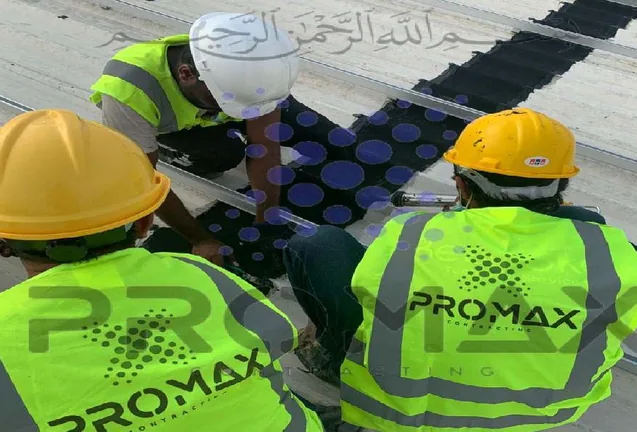
Promax Contracting can support KNX automation scopes with site coordination, supply, installation, testing, and after-sales response for villas, hotels, commercial spaces, and private projects. The focus should remain on a practical system that the owner and facility team can operate confidently.
Handover Documents Protect the Investment
A KNX project should be handed over with more than a brief demonstration. The owner or facilities representative needs device schedules, panel details, circuit references, programmed scenario descriptions, user instructions, backup project files, and warranty information. Without these records, even a minor modification can become slower and more expensive than it should be.
Training should match the user. Residents need simple guidance on scenes, thermostats, and overrides. Hotel operations staff need procedures for guest rooms and common areas. Maintenance personnel need more technical information about panels, device locations, and escalation steps. Giving every user the same technical explanation is inefficient and often leaves the people operating the building unsure of what to do.
Choosing the Right KNX Scope
Not every property needs full automation in every room. A focused scope can be more effective than an oversized system with features that are rarely used. Start with high-impact areas: main living zones, master suites, entrances, corridors, meeting rooms, guest rooms, and spaces with significant lighting or cooling demand.
Expansion should also be considered. Spare panel capacity, documented cable routes, and a structured programming approach make future additions easier. This is especially useful for owners who want to begin with smart lighting and climate control, then add shading, monitoring, or further room controls after occupancy.
The best KNX Dubai project is one that feels simple after handover. When the controls reflect the way people use the building, the technology stays in the background while comfort, efficiency, and day-to-day control improve where they matter most.
Talk to Promax
Speak to Promax for expert help in Dubai & the UAE. Call +971 56 727 4205 or request a free consultation for metal-roof waterproofing, garbage & linen chute systems and LEXA KNX home automation.