A leaking metal roof rarely starts as a major failure. In most warehouses and factories, it begins with a loosened fastener, a failed lap joint, surface rust around a screw, or water backing up at a gutter. Metal roof repair Dubai requires more than applying sealant over the visible wet area. The repair must identify the water path, assess corrosion and movement, and restore a weather-tight system that can withstand intense sun, dust, wind, and seasonal rain.
For facility managers, the cost of delay is not limited to roof damage. Water can affect stored materials, machinery, electrical routes, insulation, and daily operations. A targeted inspection and properly specified repair can prevent a small defect from becoming a broad rehabilitation project.
Why Metal Roofs Fail in Industrial Facilities
Metal roofs perform well when their panels, fasteners, flashings, gutters, and support elements work together. Failures occur when one part of that assembly deteriorates and allows water to move beneath the external sheet. The entry point and the internal leak location are often several meters apart, particularly on low-slope roofs.
In Dubai and across the UAE, heat exposure is a major factor. Metal sheets expand during the day and contract as temperatures fall. Over time, this movement can enlarge fastener holes, crack aging sealant, and open laps around ridge caps, valleys, and wall flashings. Repairs that ignore thermal movement may look acceptable at handover but fail again after repeated heat cycles.
Corrosion is another common issue. Rust often develops first around washers, cut sheet edges, gutter joints, penetrations, and locations where water remains trapped. Surface rust can be treated when addressed early. Once corrosion has reduced sheet thickness, damaged fixings, or affected purlins, the scope must shift from coating maintenance to replacement and structural repair.
Drainage problems accelerate both issues. Undersized, poorly sloped, blocked, or corroded gutters allow water to pond at roof edges. During heavy rain, water may rise above the flashing line and enter the building even where the roof sheets appear intact. A roof repair plan must therefore include the gutter and downpipe condition, not just the panel surface.
Metal Roof Repair Dubai: Start With a Site Inspection
The correct repair method depends on the roof type, slope, age, access conditions, existing coatings, and extent of deterioration. A site inspection should not be limited to looking at the ceiling stains from inside the building. Internal signs help locate the affected zone, but the external roof assembly must be checked systematically.
A practical inspection reviews the condition of roof sheets, side laps, end laps, ridge flashings, parapet interfaces, skylight details, pipe penetrations, fasteners, gutters, and drainage outlets. The contractor should also inspect insulation saturation where accessible and identify any deflection, loose sheets, damaged brackets, or corrosion around structural connections.
For active leaks, water testing can help confirm the path of ingress. This should be controlled and sequenced by roof section. Flooding the whole roof without a method can create misleading results and disrupt building operations. On large facilities, a marked roof layout and defect register make the work easier to prioritize and verify.
The inspection should separate defects into three categories: urgent leak points requiring immediate intervention, localized deterioration suitable for repair, and sections approaching the end of their service life. This distinction matters for budget planning. Spending heavily on repeated spot repairs across severely corroded sheets may cost more over time than replacing the affected roof zone and rebuilding its waterproofing details correctly.
Repair Methods That Match the Defect
There is no single product that fixes every metal roof issue. A reliable contractor selects the repair method based on substrate condition and the expected movement of the detail.
Fastener and Lap Joint Treatment
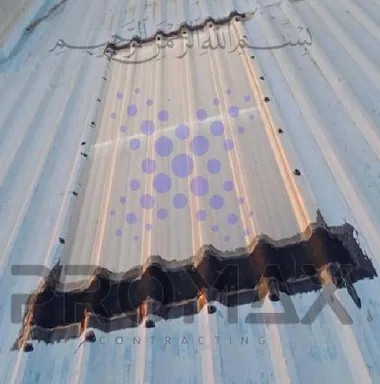
Loose, rusted, or failed fasteners are among the most frequent causes of leakage. The damaged screws should be removed and replaced with correctly sized, corrosion-resistant fasteners and compatible sealing washers. Simply adding sealant over a failed screw can trap moisture and conceal ongoing corrosion.
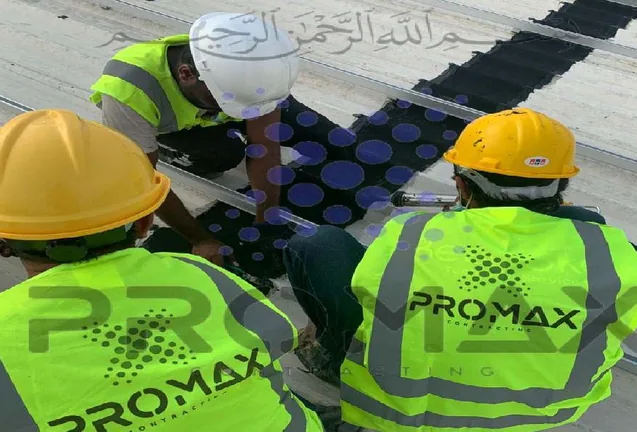
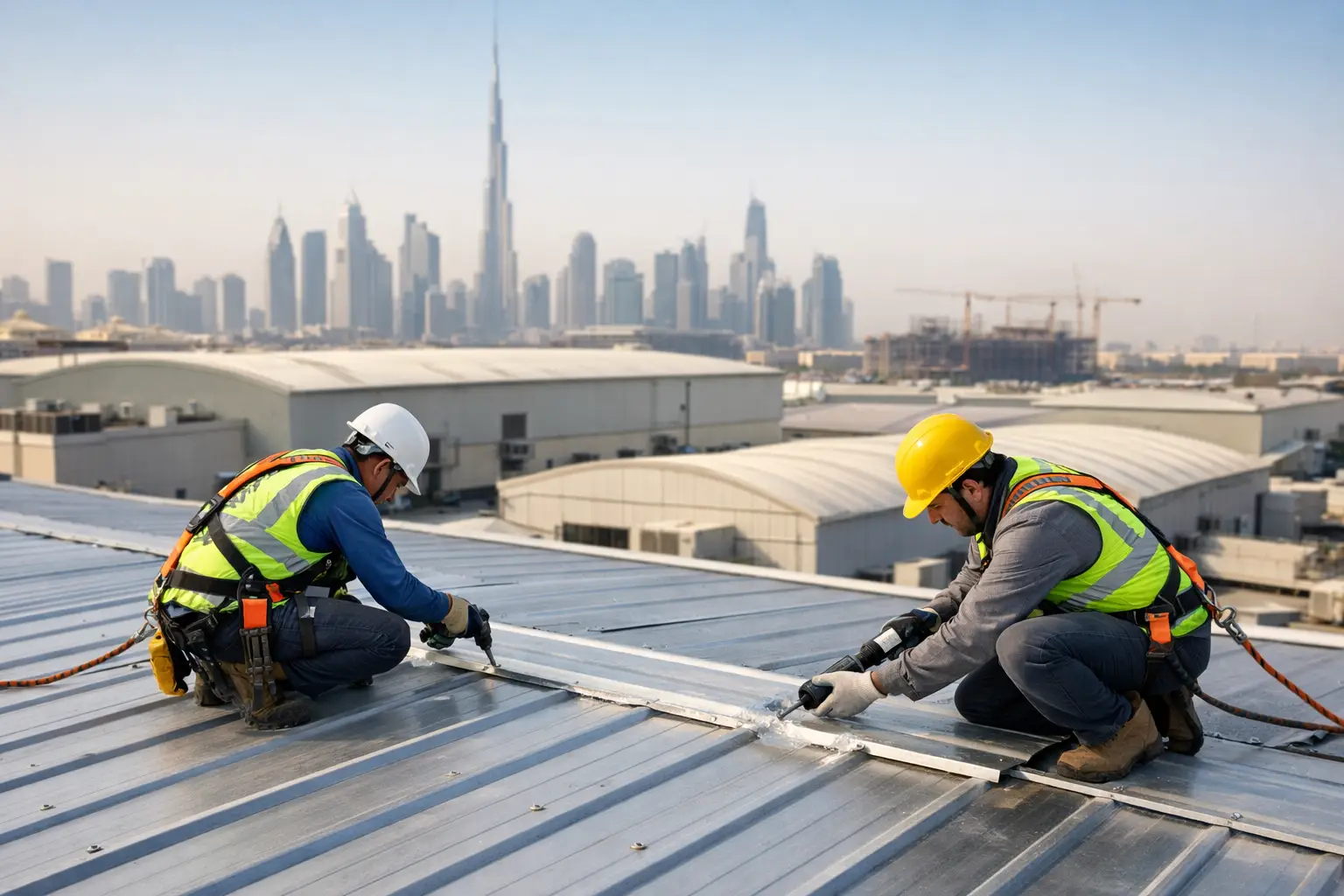
Sheet laps need close attention because capillary action can draw water beneath overlapping panels. After cleaning and preparing the area, compatible sealing materials are installed at the lap and mechanically secured where required. The objective is not to create a thick surface bead, but to produce continuous contact and a durable seal across the joint.
Flashing and Penetration Repairs
Most persistent leaks occur at transitions rather than in the middle of a roof panel. Ridge caps, wall flashings, curbs, pipe penetrations, exhaust bases, and skylight perimeters require shaped details that follow the roof profile and accommodate movement.
Improvised patching is a frequent cause of repeat callouts. A flat strip of material over a profiled sheet may leave voids where water can pass underneath. Fabricated flashings, closure pieces, compatible sealants, and properly terminated waterproofing create a more reliable result. Where penetrations are poorly positioned or heavily corroded, modifying the detail may be more cost-effective than repeatedly sealing its perimeter.
Rust Treatment and Sheet Replacement
Early-stage rust treatment starts with removing loose corrosion, cleaning the substrate, and applying an appropriate protective system. The repair must extend beyond the visible rust spot, especially around overlaps and fasteners where corrosion may continue below the surface.
Where sheets have perforated, become thin, or lost their profile strength, replacement is usually the sounder option. Replacement sections should match the existing roof profile, thickness, slope requirements, and connection arrangement. Adjacent laps and flashings must then be rebuilt so the new sheet does not introduce a weak transition.
If purlin corrosion is identified, it should be evaluated before roof sheets are reinstated. Replacing panels over deteriorated support members does not resolve the underlying risk. Purlin replacement or reinforcement requires safe access, proper sequencing, and an assessment of load transfer during the work.
Waterproofing Over Metal Roofs
For roofs with widespread minor leaks, weathered joints, or aging sheet surfaces, a continuous waterproofing system may be considered after necessary repairs are completed. EPDM-based systems can be effective when the roof is properly cleaned, prepared, detailed around penetrations, and terminated at edges and interfaces.
This approach is not a substitute for replacing severely corroded sheets or repairing failed structural elements. Waterproofing membranes need a sound substrate. If trapped moisture, loose fasteners, sharp edges, or unstable panels remain below the system, the installation will have a shorter service life and can be difficult to maintain.
The best specification depends on roof geometry and future access requirements. A simple gable roof with limited penetrations may be repaired economically at joints and fasteners. A large low-slope warehouse roof with recurring leaks at multiple details may justify a more comprehensive waterproofing scope. The decision should follow the inspection findings, not a one-size-fits-all product choice.
Plan Repairs Around Operations and Safety
Industrial roof work needs coordination. Access routes, lifting locations, material storage, fall protection, weather conditions, and protected work zones should be agreed before mobilization. Roof crews should not work directly above sensitive inventory, production lines, or electrical equipment without controls in place.
For occupied warehouses, work can often be phased by roof bay or elevation. This limits operational disruption and allows the facility team to monitor completed sections before moving to the next area. Emergency leak sealing can be carried out first, followed by permanent repairs during planned maintenance windows.
Safety access systems also deserve attention. If maintenance staff cannot safely reach gutters, skylights, or roof equipment, minor defects may remain unaddressed until they become urgent. Fixed access arrangements, designated walkways, and fall-protection provisions support ongoing maintenance and reduce unsafe ad hoc access.
What to Expect From a Repair Contractor
A capable metal roofing contractor should provide a clear defect assessment, recommended repair scope, material specification, access and safety method, and realistic program. The proposal should identify whether the work is a temporary containment measure, a localized permanent repair, or a broader roof rehabilitation package.
For large facilities, documentation is valuable. Marked-up roof plans, before-and-after photographs, repair registers, and maintenance recommendations help property teams track problem areas and plan future budgets. Promax Contracting applies this execution-focused approach to roof inspections, fabrication, waterproofing details, corrosion treatment, and after-sales response for commercial and industrial assets.
Do not wait for the next heavy rain to reveal the condition of a metal roof. Schedule an inspection when access is manageable, address minor defects while they remain localized, and build routine gutter, fastener, flashing, and corrosion checks into the facility maintenance plan.
Talk to Promax
Speak to Promax for expert help in Dubai & the UAE. Call +971 56 727 4205 or request a free consultation for metal-roof waterproofing, industrial roofing and concrete & structural waterproofing.