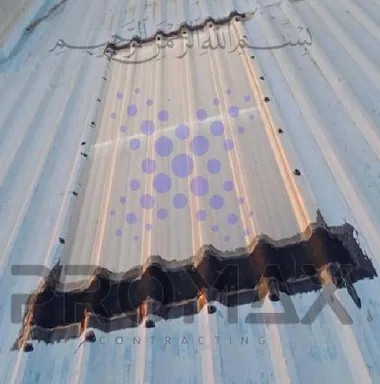
A metal roof can look sound from ground level while allowing water into insulation, purlins, ceilings, and stored inventory. The usual entry points are not dramatic holes. They are loosened screws, failed lap joints, aged sealant, corroded cut edges, damaged flashings, and drainage areas that hold water after rainfall. Metal sheet waterproofing addresses these weak points as a connected roof system rather than a collection of temporary patches.
For warehouses, factories, sheds, storage facilities, and commercial buildings, the cost of a roof leak is rarely limited to the roof. Water can interrupt operations, damage equipment, create corrosion around structural members, and trigger repeated maintenance calls. A properly specified waterproofing system protects the building envelope while extending the usable life of the existing metal sheets.
When Metal Sheet Waterproofing Is Needed
Leakage after rain is an obvious warning, but it is not the only reason to inspect a metal roof. Heat movement is a major issue on long sheet runs. Daily expansion and contraction can fatigue sealants, enlarge fastener holes, and open laps that appeared secure during installation. In hot, exposed locations, this movement is continuous and must be considered when selecting the waterproofing system.
Rust staining around screws, joints, gutters, skylights, and penetrations also requires attention. Surface rust may be manageable with preparation and protective treatment. However, deep corrosion can reduce sheet thickness, weaken overlaps, and create pinholes. Waterproofing over untreated corrosion only hides a progressing problem and can lead to early failure.
Other signs include recurring leaks in different locations, ponding water around roof drains, deteriorated foam closures, loose ridge caps, cracked sealant around pipe penetrations, and damp insulation below the sheets. These conditions call for a detailed site inspection before material selection or pricing.
Start With a Roof Condition Assessment
The most effective waterproofing work begins with diagnosis. A contractor should inspect sheet profiles, roof slope, overlaps, fasteners, flashings, gutters, drainage points, curbs, penetrations, and areas around rooftop equipment. Internal signs matter as well. Water marks, corrosion on purlins, damaged insulation, and moisture near ceiling lines help trace the actual path of water ingress.
A visible stain is often several meters away from the source. Water can travel beneath laps, along insulation, or across structural members before it appears inside the building. This is why applying sealant directly above an internal leak is not a reliable repair method.
The inspection should also determine whether the roof is suitable for restoration. Metal sheets with isolated corrosion, minor deformation, and aging joints can often be rehabilitated. Sheets that have lost structural integrity, have widespread perforation, or are poorly supported may require partial replacement before waterproofing begins. The correct answer depends on roof condition, access, drainage performance, and the building's intended service life.
The Critical Details That Cause Most Leaks
Metal roofs fail at details, not usually across the center of a sheet. Fasteners are a common issue because their washers harden, crack, or lose compression over time. Loose or overtightened screws can create gaps that allow water beneath the sheet profile. Each fastener requires inspection, tightening where appropriate, replacement where necessary, and sealing as part of the specified system.
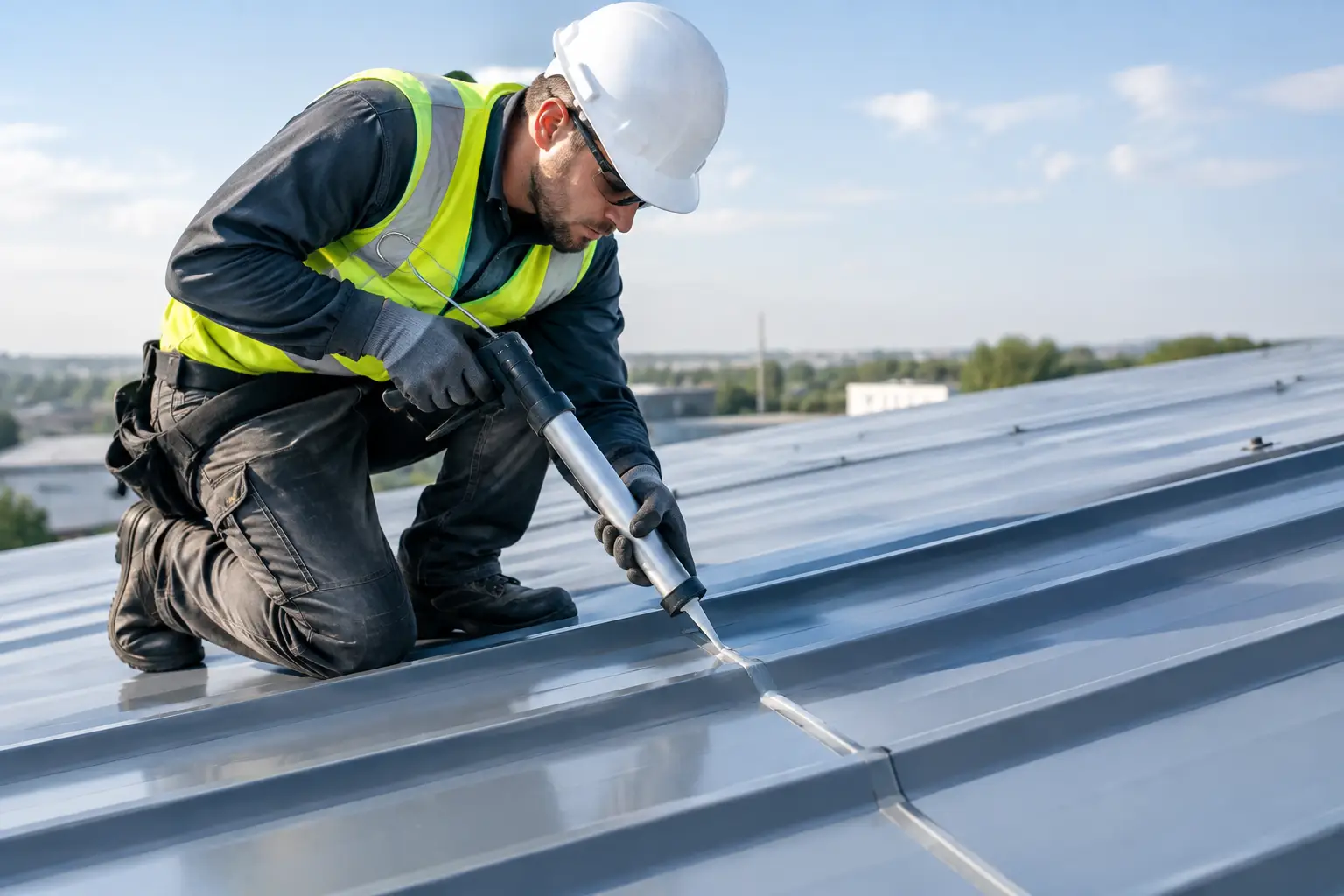
Sheet laps require equal attention. Side laps, end laps, ridge connections, and junctions with walls are exposed to wind-driven rain and thermal movement. Old sealant must be removed where it has failed, while the surfaces beneath must be cleaned and prepared before new sealing materials are installed.
Penetrations are another high-risk area. Pipes, ducts, cable routes, equipment supports, and skylight frames interrupt the natural water flow of the roof. Their flashings must be properly formed, sealed, and tied into the main waterproofing layer. A good membrane application can fail if a single penetration is left untreated.
Gutters and outlets also influence roof performance. If drainage is blocked or undersized, water remains at laps and edges longer than intended. That increases corrosion risk and places additional stress on sealants. Waterproofing and drainage maintenance should be planned together.
Choosing the Right Waterproofing System
There is no single product that suits every metal roof. A system should be selected according to the roof profile, level of corrosion, movement, drainage, exposure, and expected maintenance cycle. The goal is to create continuous protection without trapping moisture or restricting the roof's natural movement.
For many commercial and industrial applications, EPDM-based membrane systems provide a practical solution because of their flexibility and weather resistance. When correctly detailed, an EPDM membrane can bridge joints, cover fasteners, and reinforce vulnerable areas around flashings and penetrations. It is particularly useful where heat exposure and repeated movement have caused conventional sealants to crack.
Liquid-applied systems can also be appropriate for complex details, provided the substrate is dry, clean, and properly primed. Their performance depends heavily on surface preparation and achieving the required thickness. They are not a shortcut for covering dusty sheets, active rust, or standing water.
Localized repairs may be enough when the roof is generally sound and leakage is limited to defined areas. Full membrane coverage is often the better long-term choice when fastener failure, lap deterioration, and minor corrosion are spread across a large roof area. While full coverage requires a larger initial investment, it can reduce the cycle of repeated leak repairs and operational disruption.
Surface Preparation Determines Service Life
The best membrane cannot compensate for poor preparation. Before installation, the roof should be cleaned of dust, loose coating, failed sealant, oil residue, debris, and biological growth. Corroded areas require mechanical treatment to remove loose rust and expose a stable surface. Damaged sheets, flashings, closures, and fasteners should be repaired or replaced first.
After cleaning, the contractor must verify that the roof is dry. Applying waterproofing over trapped moisture can create blistering, adhesion failure, and hidden corrosion. This is especially relevant after rainfall, pressure washing, or leaks that have saturated insulation beneath the sheets.
Primer selection should match the metal substrate and membrane system. Adhesion testing on representative areas is useful for older roofs with previous coatings or unknown repair history. This step takes time, but it prevents the far greater cost of system failure after installation.
Installation Must Follow Roof Movement and Water Flow
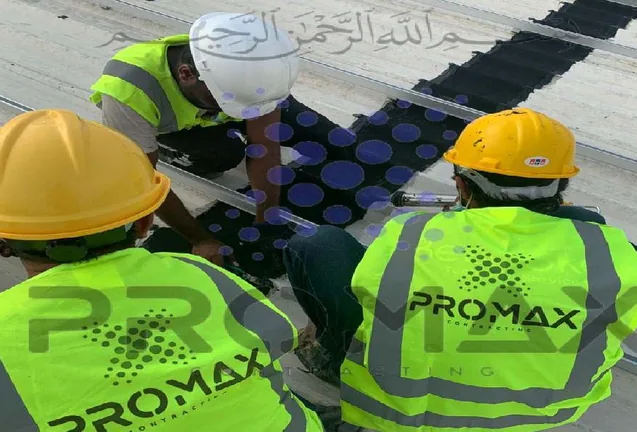
Waterproofing installation is not simply a matter of rolling out membrane. Seams need correct overlap, bonding, and pressure. Corners, changes in level, roof edges, and penetrations need reinforced detailing. Fastener lines and sheet laps may require treatment before the main membrane is applied.
The system must also respect drainage. Membrane placement should guide water toward gutters and outlets without creating raised edges that retain water. Where roof slopes are insufficient, drainage correction may be needed before waterproofing. A leak-free roof that continues to pond water will still face accelerated material wear.
Quality control during installation should include checks for adhesion, seam integrity, coverage consistency, flashing details, and complete sealing at transitions. On large facilities, work should be staged so roof access, safety requirements, and business operations remain controlled. Clear site coordination is particularly important where warehouses must stay active during repairs.
Maintenance Protects the Waterproofing Investment
A waterproofed roof is not maintenance-free. It requires scheduled inspection, especially after severe weather, building modifications, or work by other trades on the roof. New penetrations, damaged flashings, blocked gutters, and foot traffic can compromise an otherwise sound system.
A practical maintenance plan includes cleaning drainage routes, checking seams and edge terminations, examining fasteners and penetrations, and addressing minor damage before it becomes an internal leak. Photographic inspection records also help facility teams track changes over time and plan repairs before emergency conditions develop.
Promax Contracting approaches metal roof rehabilitation through inspection, surface repair, membrane application, fabrication support, and after-sales response. This end-to-end approach is valuable when leakage, corrosion, drainage, flashings, and access requirements must be resolved under one coordinated scope.
The right time to act is before the next leak reaches production areas, stock, or structural steel. A detailed roof inspection gives facility teams the information needed to repair what is failing now and protect the metal roof for the years of service still ahead.
Talk to Promax
Speak to Promax for expert help in Dubai & the UAE. Call +971 56 727 4205 or request a free consultation for metal-roof waterproofing, industrial roofing and concrete & structural waterproofing.