A skylight leak rarely stays a skylight problem. In a warehouse or factory, water entering around a skylight frame can travel through insulation, steel members, cable routes, and ceiling systems before it becomes visible below. That is why skylight leak repair Dubai requires more than applying sealant at the point where water appears. The repair must identify the failed detail, stop water at its entry path, and restore the roof assembly around the opening.
For facility managers, the immediate concern is usually operational continuity. Stock, machinery, electrical services, and occupied work areas may sit directly below the affected roof zone. A fast response matters, but a quick patch without diagnosis can leave the same leak active beneath the roof surface. The result is repeated callouts, hidden corrosion, and a repair cost that grows with every rain event.
Why Industrial Skylights Begin to Leak
Industrial skylights are exposed components installed within a larger roof system. Their frames, fasteners, upstands, flashing, sealant joints, and adjacent roof sheets must work together under heat, movement, wind-driven rain, and regular maintenance traffic. Failure in any one of these points can allow water into the building.
In the UAE, intense sunlight accelerates the aging of exposed sealants and some plastic skylight components. Daily temperature changes cause expansion and contraction between metal roofing, skylight frames, and waterproofing materials. Over time, a joint that once appeared secure can separate at an edge or around a screw penetration.
Drainage also plays a major role. When debris collects near a skylight or the roof has inadequate falls, water remains around the frame longer than intended. Standing water tests every weak joint. On metal roof systems, corroded fasteners, loose stitching screws, deteriorated butyl tape, and damaged side laps near the skylight can be mistaken for a frame leak. A proper inspection separates the actual failure point from the visible water stain inside the facility.
Skylight Leak Repair Dubai Starts With Site Inspection
Effective repair begins at roof level and inside the building. The inspection team should review the skylight panel condition, frame joints, curb or upstand height, flashing arrangement, fixing points, roof-sheet laps, and nearby drainage path. Interior checks help trace the water route, especially where insulation or structural members redirect moisture away from the original entry point.
The inspection should also establish whether the skylight itself has reached the end of its service life. A cracked or brittle panel cannot be made reliable through perimeter sealing alone. Similarly, a distorted frame or poorly formed curb may need mechanical correction before waterproofing can perform as intended.
For large facilities, the roof should be assessed as a connected system rather than as an isolated opening. If several skylights show aging sealant, rusting screws, or failed overlaps, treating one unit may provide only temporary relief. A planned repair program can address repeat defects efficiently while minimizing roof access and disruption to operations.
Common Defects Found Around Skylights
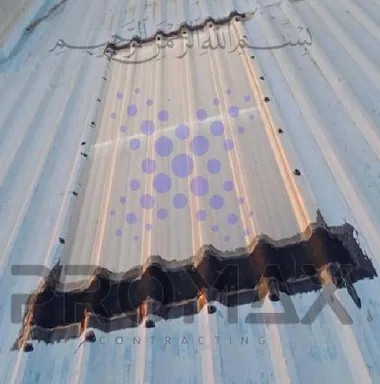
The most frequent failures are not always obvious from below. They commonly include degraded perimeter sealant, open flashing laps, failed fastener washers, cracks in polycarbonate panels, loose frame sections, and membrane termination failure at the curb. Water can also enter through roof penetrations or sheet joints located uphill from the skylight and emerge at its frame.
Another recurring issue is incompatible repair material. A generic sealant may adhere briefly but fail under UV exposure, movement, or standing water. Materials must be selected for the roof substrate, the skylight frame, and the proposed waterproofing system. Adhesion, flexibility, chemical compatibility, and edge termination all matter.
Selecting the Right Repair Method
There is no single repair method for every leaking skylight. The right approach depends on the roof type, skylight construction, extent of deterioration, and expected remaining service life of the surrounding roof.
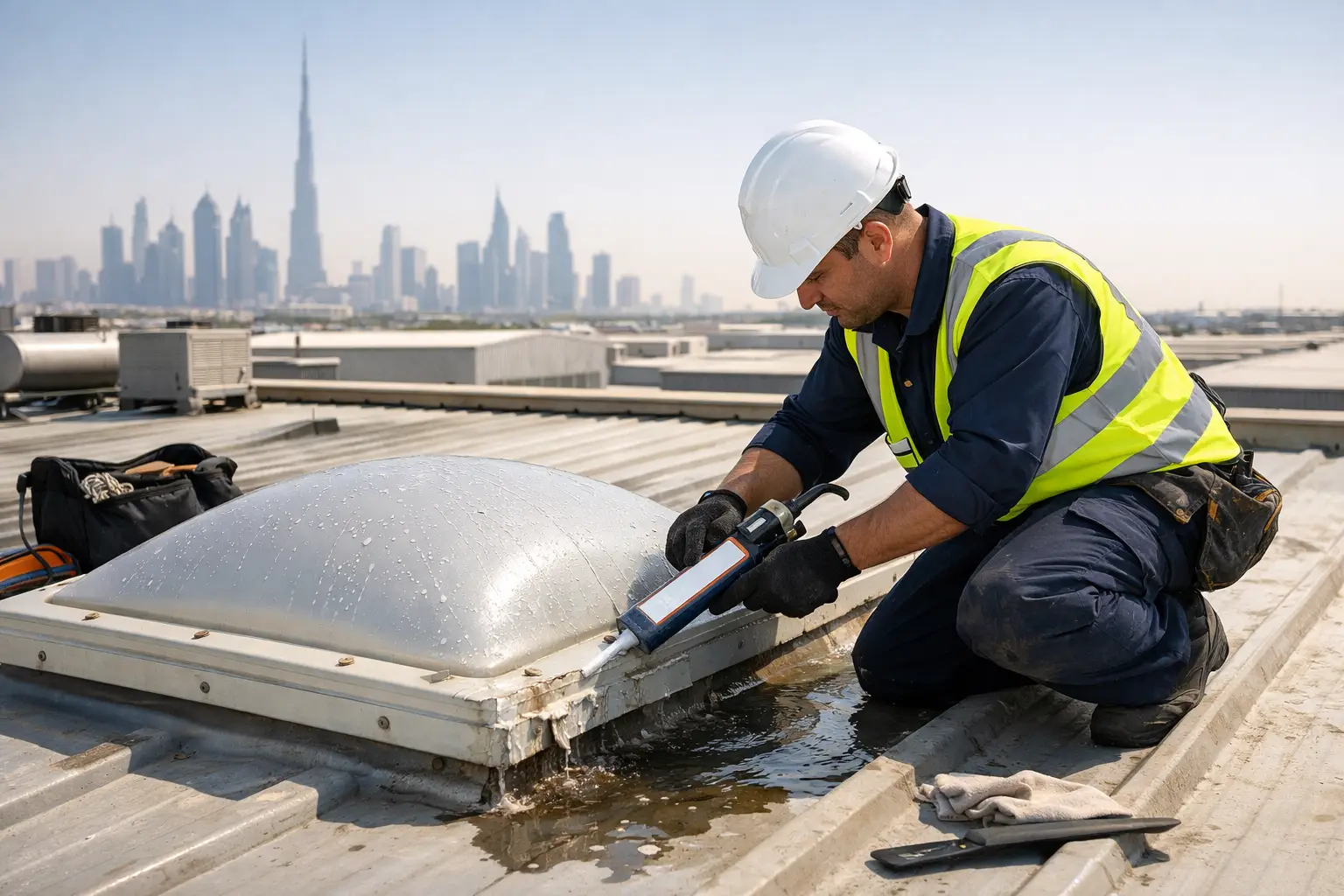
For a localized defect on an otherwise sound unit, the work may involve removing failed sealant, cleaning and preparing the substrate, treating corroded metal where required, replacing defective fasteners, and resealing joints with a suitable weather-resistant system. This can be effective when the frame is stable and the existing flashing detail remains properly formed.
Where the waterproofing around the opening has failed, a more durable approach is to rebuild the transition between roof and skylight curb. EPDM-based waterproofing systems can be detailed around compatible upstands and roof interfaces to create continuous coverage. The crucial point is not simply placing membrane near the frame. The system must be properly bonded, dressed into corners, terminated securely, and protected at vulnerable edges.
If the panels are heavily weathered, cracked, or no longer safely fixed, replacement may be the sensible option. Replacing panels without correcting failed flashing, drainage, and adjacent roof defects is a false economy. Conversely, full replacement is not always necessary when a targeted repair can restore a sound unit. A site inspection provides the basis for that decision.
Repair Versus Replacement: What Facility Teams Should Consider
Repair is usually appropriate when the skylight structure is stable, leaks are limited to identifiable joints or fixings, and replacement materials are still compatible with the existing assembly. It offers a faster and more cost-controlled route when properly detailed.
Replacement becomes more practical when multiple panels are brittle or broken, frames are badly corroded or distorted, repeated repairs have failed, or the skylight no longer meets the facility's daylighting and safety requirements. The choice should account for access requirements, roof downtime, material lead times, and the condition of the roof area surrounding the skylight.
Execution Details That Prevent Repeat Leaks
The difference between a temporary patch and a dependable repair is execution. Surfaces must be dry, clean, and mechanically sound before any sealant or membrane is applied. Loose old material should be removed rather than covered over. Rusted metal requires preparation and treatment before it is sealed, otherwise corrosion can continue underneath the repair.
Fasteners need close attention. A deteriorated washer or enlarged fixing hole can admit water even when the surrounding sealant looks intact. Where replacement is required, fasteners should be selected for the roof system and installed without over-tightening, which can deform panels or compromise sealing washers.
Flashing must direct water away from the skylight, not trap it at the frame. This is especially significant on low-slope metal roofs, where water can be driven sideways during severe weather. Side and upper flashing details, corner transitions, and terminations should be inspected as carefully as the lower edge. The lower edge may be where water becomes visible, but it is often not where the failure began.
Quality control should include a final review of all treated joints, edges, and nearby roof interfaces. Where conditions allow, controlled water testing can confirm performance before the work area is handed back. Clear documentation of the repair scope also gives maintenance teams a useful record for future roof planning.
Reducing Operational Risk During Repair Work
Skylight repair often takes place above active storage, production, or loading areas. Safe access, work-zone control, and weather monitoring are part of the repair plan. Roof work should be scheduled with the facility team so sensitive equipment, stock, and personnel can be protected below the affected area.
For large roofs, temporary leak-control measures may be necessary before permanent repairs can proceed. These measures should be clearly identified as temporary. They can reduce immediate exposure, but they should not replace substrate preparation, proper flashing restoration, and complete waterproofing detailing.
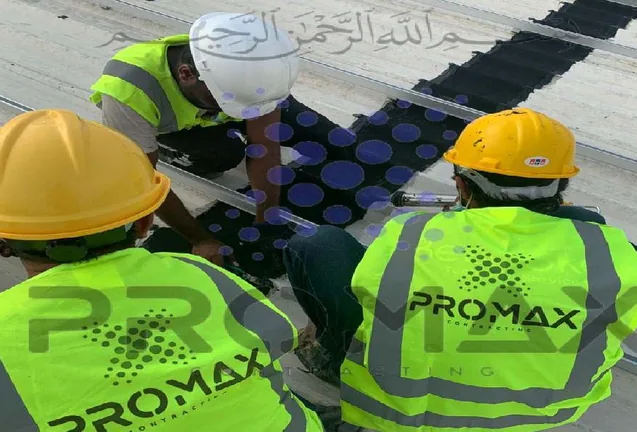
Promax Contracting approaches skylight leakage as a roof-envelope issue, combining site inspection, repair planning, fabrication support where needed, waterproofing execution, and after-sales response. This approach is particularly valuable where multiple roof defects, corroded metal components, and drainage concerns overlap around the same skylight zone.
Maintenance Checks That Protect the Repair
A repaired skylight should be included in routine roof inspections, particularly before and after periods of heavy rainfall. Maintenance teams should look for debris accumulation, open sealant edges, loose fasteners, panel cracking, and early corrosion around frames and adjacent sheet laps. Catching these changes early is far less disruptive than responding after water has entered the building.
Avoid allowing unplanned roof traffic directly across skylight panels or their flashing. Even small impacts can crack brittle material, deform a frame edge, or weaken a previously sealed transition. If equipment access is regularly required, the route and safety provisions should be planned rather than improvised.
The most useful next step after a leak appears is to document its location, timing, and weather conditions, then arrange a roof-level inspection before another rainfall turns a manageable repair into damage across the facility.
Talk to Promax
Speak to Promax for expert help in Dubai & the UAE. Call +971 56 727 4205 or request a free consultation for metal-roof waterproofing, industrial roofing and concrete & structural waterproofing.